
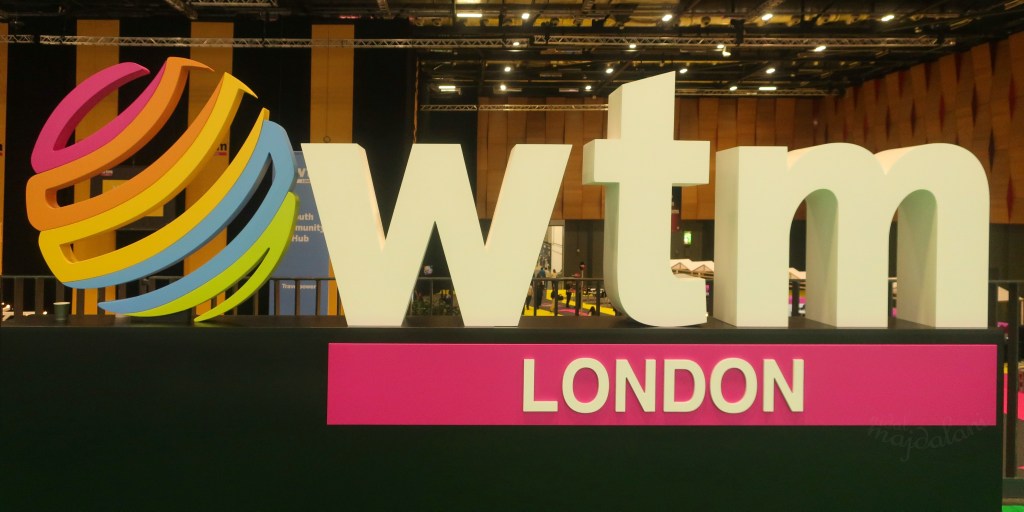
WTM London 2025: The World Reunites to Rethink Travel
Every November, the global travel industry converges on London for WTM London, a cornerstone event where destinations, brands, technologists and policymakers gather to shape the future of tourism. Founded in 1980, WTM London has evolved from a small trade show into a vast platform generating billions in business deals, representing thousands of exhibitors from nearly 200 countries.
In 2025, the event returns to its home at ExCeL London from 4–6 November, expanded to accommodate the world’s biggest travel ambitions and deepest conversations. This edition comes amid a shifting landscape of traveller behaviours, global investment flows and sustainability imperatives.
Here, at the heart of the global travel trade, the question is simple yet profound: how do we translate data into dialogue, growth into meaning, and innovation into connection? As leaders and learners alike gather, WTM London 2025 offers a moment of recalibration.
I am honoured to be invited to attend this year’s event, to connect with fellow professionals and follow the conversations shaping the next decade of tourism, where data becomes dialogue, innovation meets empathy, and travel once again proves its power to connect the world.
WTM London 2025 — A Pulse That Fills the Halls
Inside the Halls, the Sessions and the Ministers’ Summit
Report 1 – Opening Day Coverage
Reporting from WTM London 2025 | © Nidal Majdalani | Travelling Lebanon 2025
Sources: WTM Global Travel Report 2025 by Tourism Economics; WTM London official website (wtm.com); © WTM London & Tourism Economics 2025
A New Global Rhythm
ExCeL London opened its doors to a surge of voices, screens, and movement, the sound of the world meeting again.
From its first moments, WTM London 2025 set a rhythm that pulsed through every corridor: a shared determination to re-imagine travel’s purpose in an era of rapid change.
According to the newly released WTM Global Travel Report 2025, produced with Tourism Economics, global tourism is expected to expand 3.5% a year through 2035, outpacing global GDP growth of 2.5% and supporting roughly 12% of all jobs worldwide.
Behind the data lies a deeper question echoing across sessions and stages: how can this growth remain human?
This year’s event brings together over 5,000 exhibitors from nearly 200 countries and regions, alongside more than 40,000 travel professionals, marking one of the largest gatherings in WTM’s 45-year history.
What filled the halls was more than business, it was the collective pulse of an industry ready to balance ambition with empathy, innovation with inclusion, and progress with purpose.
Conversations That Move Beyond Numbers
Across the halls, entire worlds came to life. The air shimmered with colour and rhythm, the aroma of spices mingling with the glow of digital screens. Ancient heritage met modern skylines as stands rose like architectural theatre with facades recalling old marketplaces, grand entrances inspired by museum halls, and vast digital walls alive with desert roads and coral coasts. Overhead, suspended gardens and sculpted arches framed immersive spaces where light, scent, and sound intertwined, turning national showcases into living works of art.
Moving through the halls felt like crossing continents in a single day. Each space revealed its own rhythm of craft, culture, and innovation as stories unfolded through design, scent, and light. Together they formed a living atlas of human creativity, the world gathered under one roof and its many voices speaking in one shared language of connection.
Sustainability, Investment, and Education
Sustainability, tourism investment, and the rise of new travel markets shaped the conversations on the first day of WTM London 2025.
At the heart of the opening day, the WTM Ministers’ Summit 2025, co-hosted by UN Tourism, brought together ministers, investors, and private-sector leaders for its 19th edition. Discussions centred on rethinking global tourism investment and strengthening education as the foundation for a more sustainable and resilient industry.
Under the theme “Reimagining Tourism Investment Models: Building Next-Generation Incentives,” Ministers and professionals explored how to design smarter, more inclusive frameworks that align fiscal and non-fiscal tools, unlock capital through blended finance, and empower youth through education, innovation, and digital skills for long-term resilience.
The dialogue reaffirmed that future-ready investment means growth that is sustainable, inclusive, and transformative. Ministers from across regions shared examples of how public–private partnerships are driving responsible development, using fiscal incentives to attract investors while embedding sustainability and community engagement at the core of national strategies.
Education emerged as the cornerstone of this transformation. European representatives discussed new approaches to vocational training and digital capacity building, ensuring tourism remains an appealing and respected profession. The message was clear: building people is building destinations.
The Sustainability Conference opened with “Other Worlds Are Possible: Reimagining Tourism’s Purpose,” where independent climate expert Jeremy Smith urged participants to redefine tourism’s role within the climate emergency. “Climate literacy will come through what we feel, not what we read,” he said, calling for experiences that foster empathy rather than simply measure emissions. He highlighted initiatives where hotels employ refugees and walking tours are led by people who have experienced homelessness as tangible examples of tourism’s ability to connect and empower.
The Future of Demand
Later panels turned their focus to shifting traveller behaviour. Analysts highlighted the next wave of outbound travel from East Asia, where a new generation of travellers now seeks authenticity, cultural connection, and emotional depth rather than luxury or scale.
At the Travel Trends session, experts noted that major cultural gatherings such as concerts and sporting events increasingly inspire travellers from China to explore new destinations, a theme further explored in The Importance of Play in Shaping Destinations in the Future discussion.
Industry leaders agreed that experiences, live events, and cultural encounters have become core motivators, reflecting a wider global shift toward what many described as “the importance of play.” Research presented by MMGY in partnership with Qiddiya City revealed that 70% of travellers view play as essential to travel, redefining leisure as a growing cultural and economic force shaping destinations worldwide.
In Soft Power Advantage: Leveraging the UK’s Global Influence, Patricia Yates, CEO of VisitBritain, shared that inbound tourism to the UK has risen 6% year-on-year, while emphasising the need to encourage visitors to discover the country’s diverse regions beyond London, ensuring growth that is both inclusive and far-reaching.
Technology, Quietly Everywhere
Innovation flowed through the halls as seamlessly as the crowd itself. Inside the Tech Zone, displays of AI powered itineraries, virtual reality headsets, and instant translation devices showed how imagination is becoming infrastructure in modern travel.
According to data shared at WTM, travellers can now enter 110 countries visa free, reflecting the growing ease of global mobility. The upcoming GCC Unified Visa, expected to launch later in 2025, will connect six Gulf States under one travel document and is projected to add around 5 million visits annually.
At the same time, 60% of travellers now support the use of biometric borders, and 70% of Gen Z expect to manage their entire journey through mobile platforms. Technology here does not replace people, it refines the journey itself, building bridges where language or logistics once created distance.
Vox Group: Rehumanising Travel
At the TrendFest Main Stage, John Boulding, Chief Marketing Officer of Vox Group, presented Empowering Experiences Through Tech, Community and Local Insight.
He showed how AI powered live translation, GPS based storytelling, and the POPGuide platform are reshaping the way destinations connect with visitors. Guides speak naturally while travellers instantly hear translations in their own language, keeping the emotion and authenticity of the moment intact.
“Every journey must be without barriers,” Boulding said, affirming Vox’s mission to use innovation to bring people closer together. The company’s tools integrate local voices, intelligent narration, and data driven visitor management, helping travellers explore responsibly while allowing destinations to protect their cultural and environmental balance.
His message, that technology should serve empathy, reflected the wider themes running through WTM London 2025: inclusion, sustainability, and human connection.
Movement on a Massive Scale
The WTM Global Travel Report 2025, produced in partnership with Tourism Economics, revealed the scale of transformation shaping the decade ahead. Global travel and tourism are forecast to grow 3.5% annually through 2035, outpacing the 2.5% global GDP average and projected to reach 16.5 trillion USD, sustaining about 1 in 8 jobs worldwide.
International leisure nights are expected to rise 5.1% in 2025 and 9.0% in 2026, nearly three times faster than domestic travel, signalling the continued strength of cross-border journeys. By 2030, an estimated 1.1 billion households, around 40% of the global population, will have the disposable income to travel, with spending on travel representing 8.4% of total household expenditure worldwide.
Regional momentum is led by Asia Pacific and the Middle East, both projected to grow by around 10% annually through 2030,, followed by Europe (+6%), Africa (+5%), and Latin America (+5%). The fastest-growing national markets include China (+12%), India (+11%), Thailand (+11%), Saudi Arabia (+16%), Madagascar (+10%), and Iceland (+10%).
At the city level, Bangkok (+89%), Dubai (+51%), London (+23%), Tokyo (+25%), and Istanbul (+23%) are projected to lead visitor growth by 2030. The report also noted the rise of 150 million new “travelling-class” households by the end of the decade, with 110 million located in Asia Pacific and 40% in China alone.
The Chinese market remains central to global tourism’s expansion, expected to account for 27% of the worldwide increase in international travel spending by 2030. Leisure travel continues to dominate, representing 85% of international and 78% of domestic tourism expenditure. Overall, international arrivals are forecast to climb from 1.5 billion in 2025 to 2 billion by 2030, marking a new chapter in global mobility and connection.
Connections beyond the Numbers
As evening settled over ExCeL London, conversations moved from panels to people. The networking event brought together professionals from every corner of the industry in a shared space of exchange and collaboration, a reminder that travel’s purpose begins with connection.
Day one closed with a clear sense of momentum, setting the stage for day two’s discussions on innovation, investment, sustainable growth, and beyond.
© Nidal Majdalani | Travelling Lebanon 2025 | Field Reporting from WTM London 2025
For collaborations and projects in destination marketing, sustainable tourism development, travel writing, and guidebook creation, or for destination photography that celebrates the heart of nature, heritage, and culture, connect through nidal.majdalani@gmail.com
 Nidal Majdalani - Travelling Lebanon
Leave a comment